

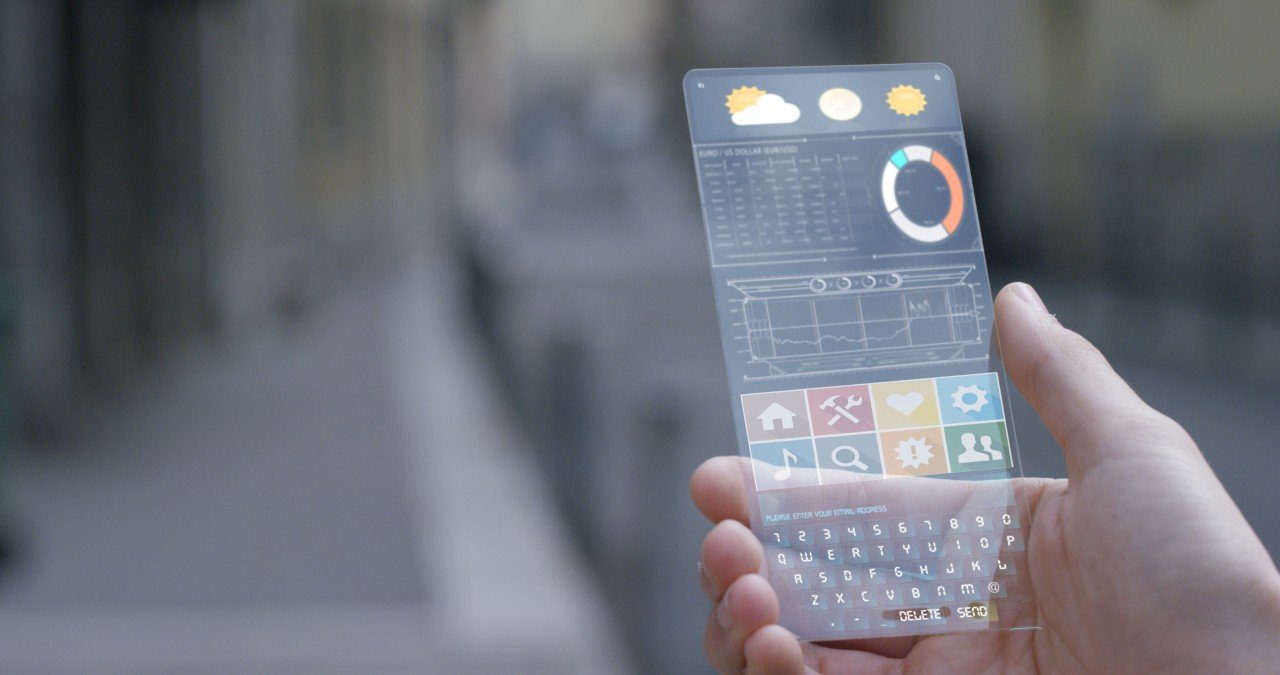
The phrase “tech giants envision future beyond smartphones” is not just a catchy headline. It reflects a real shift happening across the industry. Phones are still central to our lives, but growth has slowed, upgrades feel less exciting, and people are holding devices longer. At the same time, AI is changing how we search, create, and communicate. That combination is pushing major companies to rethink what “the main device” should be in the next decade—something more natural, more ambient, and less tied to a rectangular screen.
This future won’t arrive as one single gadget that instantly replaces your phone. Instead, it will look like a gradual handoff. Some tasks move to glasses, some to earbuds, some to watches, and some to new kinds of spatial computers. Behind the scenes, AI assistants will become the glue that connects everything. The biggest companies are already placing bets, building platforms, and fighting to define what comes after the smartphone era.
Meta description: Tech giants envision future beyond smartphones through AI assistants, smart glasses, spatial computing, wearables, and ambient devices—here’s what’s coming, why it matters, and how daily life may change.
Table of Contents
ToggleWhy Tech Giants Envision Future Beyond Smartphones Now
If smartphones were still growing fast, companies would have less reason to disrupt them. But today, many people feel their phone already does “enough.” Better cameras and faster chips are great, yet they’re not always worth a yearly upgrade. That creates pressure: if the phone market becomes mostly replacement sales, big brands need new product categories to keep expanding.
Another reason is AI. The more powerful AI gets, the less you need to tap through apps and menus. You can speak, show your camera, or ask for help in a natural way. This makes it easier to imagine devices that don’t need a big touchscreen at all. Companies also want to own the next platform—because whoever controls the platform controls the app ecosystem, the payments, the advertising, and the data (with all the privacy debates that come with it).
Finally, there’s a lifestyle factor. People want to look up more, not down. Many users say they want less screen time, fewer distractions, and more “calm” technology. That demand is opening the door for devices that sit in the background and only appear when needed.
Tech Giants Envision Future Beyond Smartphones Through AI-First Experiences
AI is the strongest bridge from phone-centric life to device ecosystems. Instead of opening five apps to plan a trip, you ask one assistant to handle everything: ideas, booking, reminders, translations, and summaries. This is why companies are racing to rebuild assistants into something smarter and more conversational.
Recent reporting highlights how seriously Apple is treating this direction, including major plans to upgrade Siri into a more chatbot-like experience integrated across devices. That matters because once the assistant becomes powerful enough, the screen becomes less important. The assistant can live in your ear, on your wrist, or in your glasses.
AI is also pushing “multimodal” computing—where you don’t just type, you talk and show what you see. Smart glasses and camera-based wearables become more useful when the assistant can understand the environment, answer questions about what you’re looking at, and translate in real time. Meta has been adding this kind of capability to its Ray-Ban Meta glasses, including features like translation and visual assistance.
Smart Glasses and AR: The Most Likely “Next Screen”
When people imagine life after smartphones, smart glasses often lead the conversation. The idea is simple: instead of pulling a phone from your pocket, information appears in your field of view when you need it—directions, messages, quick answers, photo capture, or a discreet prompt during a conversation.
Glasses have one huge advantage: they fit into daily life. You can wear them all day without changing behavior much. That’s why multiple companies are treating glasses as a possible “next platform.” Meta, for example, has positioned its Ray-Ban collaboration as a serious product category and has discussed scale ambitions, while reporting indicates meaningful sales traction.
Still, AR glasses face hard challenges:
-
Display tech: bright, clear visuals in a thin frame is difficult and expensive.
-
Battery life: all-day wear means battery must last without bulky hardware.
-
Privacy: cameras on faces create social tension in public spaces.
-
Comfort and fashion: people won’t wear something that feels awkward or looks strange.
So the near-term likely path is “AI glasses first, full AR later.” In other words: audio, cameras, and lightweight features now—high-quality displays as the technology matures.
Spatial Computing Headsets: Big Capability, Smaller Audience (For Now)
Another major bet is spatial computing—headsets that blend digital content into your physical space. Apple has been pushing this concept with Apple Vision Pro, describing it as a new era of “spatial computing.”
These devices can be amazing for certain tasks: immersive entertainment, 3D design, training, remote collaboration, and focused productivity. But they are not yet “everyone, all day” devices. Price, comfort, and social practicality limit adoption. You won’t see most people wearing a headset on a commute.
What headsets can do, though, is prove the interface: hand tracking, eye tracking, 3D windows, and apps that feel like they’re floating in your room. Headsets can also build the developer ecosystem that later moves into glasses. Think of them as the “early stage” of a future where AR becomes mainstream.
Android XR and the Platform Battle Beyond Phones
Whenever a new computing category emerges, platforms matter as much as hardware. Google has explicitly moved in this direction with Android XR, announced as a way to bring the Gemini era into headsets and glasses—built with partners like Samsung and Qualcomm.
This is important because it signals that the future beyond smartphones won’t be owned by one device. It will be an ecosystem battle:
-
Apple aims for tight integration across a controlled set of devices.
-
Google aims to enable many hardware makers through a shared platform.
-
Meta aims to control social layers, identity, and AI experiences.
-
Microsoft aims to embed AI into work, cloud, and productivity.
The company that wins isn’t necessarily the one with the fanciest gadget—it’s the one that convinces developers, enterprises, and consumers to build habits around their ecosystem.
Wearables, Earbuds, and Watches: Quiet Winners in the Shift
Not every “post-smartphone” device looks futuristic. In fact, the most successful changes often happen quietly. Smartwatches already handle quick tasks: health tracking, notifications, payments, and workouts. Earbuds are becoming always-on assistants with better microphones, noise cancellation, and translation features.
The big trend is distribution of tasks:
-
Quick replies and alerts go to your watch.
-
Voice commands and calls go to earbuds.
-
Visual guidance and capture go to glasses.
-
Deep work stays on laptops, tablets, or headsets.
-
The phone remains the “hub” during the transition.
This is how disruption usually happens: not by deleting the old tool overnight, but by slowly reducing how often you need it.
AI Pins and Clip-On Devices: Risky but Revealing Experiments
Some companies are exploring screenless devices you clip to your clothing—often called AI pins or wearable assistants. These ideas are controversial because many earlier attempts struggled. But the experiments are still revealing: companies are testing what happens when AI is your interface, not an app.
Recent reporting suggests Apple has explored an AI wearable concept described as a small pin-like device with cameras, microphones, and a speaker, possibly years away if it ships at all. The exact product outcome is uncertain, but the direction is clear: the industry is trying to find new shapes for daily computing.
These devices face tough questions:
-
Why would someone wear it instead of using earbuds?
-
How does it avoid being annoying or creepy?
-
What does it do better than a phone in your pocket?
Even if some fail, the lessons will influence the designs that follow.
What the “Beyond Smartphone” World Might Look Like in Daily Life
If tech giants envision future beyond smartphones, what does that actually mean for normal people?
Here’s a realistic picture of the next phase:
-
Your phone becomes less “front-and-center.”
You still own one, but you unlock it less often. -
You interact by voice and glance.
Short questions go to earbuds; quick visuals appear on glasses. -
Apps become services, not icons.
You ask for results (“book this,” “summarize that,” “translate this sign”) and the system handles the steps. -
Your environment becomes part of computing.
Your devices understand what you’re looking at and where you are (with privacy controls that matter a lot). -
The device you notice most may be the one you wear.
Watches, rings, earbuds, and glasses become your main touchpoints.
The Biggest Obstacles: Privacy, Battery, and Social Acceptance
This future is exciting, but it has real friction.
-
Privacy: Cameras and microphones on wearables raise concerns. Companies will need clear indicators, strong on-device processing, and strict user controls.
-
Battery life: All-day devices must last all day. That sounds simple, but it’s a major technical barrier.
-
Comfort and style: Wearables must feel good and look good, or people won’t adopt them.
-
Trust: AI assistants must be accurate, secure, and transparent about what they do with your data.
-
Value: Consumers won’t buy new categories unless the benefits feel obvious and daily.
These obstacles are why smartphones won’t disappear quickly. The shift will be gradual, and some device categories will stall before they succeed.
Conclusion: The Smartphone Won’t Vanish—But It Won’t Stay Alone
The smartphone is still the most powerful everyday device we have. But the direction is changing. Tech giants envision future beyond smartphones because AI makes new interfaces possible, growth demands new platforms, and users want technology that feels more natural and less distracting.
In the coming years, the biggest change may not be one “replacement” device. It may be a team of devices—glasses, earbuds, watches, and spatial computers—working together through AI. Your phone becomes more like a controller and backup brain than the main event. And over time, as wearables get better, cheaper, and more socially normal, the center of gravity will shift.
FAQs
1) Will smartphones be replaced completely?
Not soon. Smartphones will likely remain the main hub for many years, while wearables and spatial devices slowly take over smaller tasks like quick answers, navigation, and messaging.
2) What device is most likely to become the “next smartphone”?
Smart glasses are a strong candidate because they fit naturally into daily life and can deliver information instantly. However, they still need major improvements in battery, displays, and privacy acceptance.
3) How does AI change the future beyond smartphones?
AI reduces dependence on screens by letting people interact through voice, vision, and context. Instead of managing apps, users ask assistants to complete tasks end-to-end.
4) Are headsets like Apple Vision Pro the future for everyone?
They may be a major future category, but today they’re more likely to serve professionals and enthusiasts. Headsets can still shape what comes next by building the software and interface ideas that later move into lighter devices.
5) What’s the biggest risk in moving beyond phones?
Privacy and trust. As devices get more personal—listening, seeing, and assisting throughout the day—people will demand stronger protections, clear controls, and real accountability.
If you want, I can also rewrite this into WordPress-ready HTML blocks (clean headings, short paragraphs, FAQ schema-ready structure) while keeping the keyword density under your limit.
