

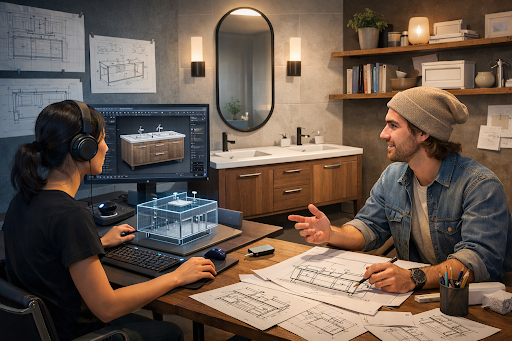
In 2026, bathroom design is no longer just about aesthetics. It’s about precision, collaboration, sustainability, speed, and digital integration. From boutique residential renovations in the UK to luxury hospitality projects in the USA, the way designers communicate ideas has evolved dramatically.
One debate continues to surface in architecture and interior design studios:
Do designers still prefer hand sketches, or have bathroom vanity CAD drawings fully taken over?
For business owners, startups, architects, engineers, and tech decision-makers, this question isn’t just creative, it’s commercial. The choice between a sketch and a CAD drawing impacts cost, fabrication accuracy, timelines, and even client satisfaction.
Let’s explore what professionals actually prefer in 2026 and why.
Why Is This Debate Still Relevant in 2026?
Despite rapid digitization, hand sketches haven’t disappeared. Many senior designers in the UK and US were trained in traditional drafting methods and still value the emotional clarity of a quick pencil concept.
At the same time, advanced CAD tools such as AutoCAD, SketchUp, Revit, and SolidWorks are reshaping how bathroom interior design services operate globally.
The tension isn’t about creativity vs. technology anymore.
It’s about:
- Speed vs. sentiment
- Accuracy vs. expression
- Scalability vs. individuality
- Collaboration vs. personal workflow
And in commercial environments especially in the UK construction sector precision usually wins.
What Makes Hand Sketches Still Valuable?
Let’s start with what sketches do exceptionally well.
1. Fast Conceptualization
When designers meet clients for early-stage discussions, hand sketches allow instant visualization. A rough drawing can:
- Capture mood and proportions quickly
- Spark creativity
- Help clients emotionally connect with a concept
2. Creative Freedom
Sketches encourage fluid thinking. There are no constraints of layers, dimensions, or technical parameters. This is particularly helpful when exploring:
- Bathroom wooden cabinet designs
- Organic vanity shapes
- Custom storage layouts
3. Personal Design Identity
Many boutique studios in London, Manchester, and New York still showcase hand sketches in their portfolios to demonstrate artistic credibility.
However, these crucial sketches are rarely the final deliverable in 2026.
Why Are Bathroom Vanity CAD Drawings Dominating Professional Projects?
The shift toward bathroom vanity CAD drawings is not a trend. It’s a structural industry transformation.
1. Precision and Fabrication Accuracy
Bathroom vanities involve:
- Plumbing integration
- Electrical cut-outs
- Hardware placements
- Material tolerances
- Wall alignment
A 5mm error can delay installation.
CAD drawings provide:
- Exact measurements
- Layered detailing
- Sectional views
- Manufacturing-ready documentation
According to industry data from Autodesk, digital drafting workflows reduce rework by up to 30% in complex interior millwork projects.
For UK and US contractors facing labor shortages and tight deadlines, that reduction is critical.
2. Seamless Collaboration Between Designers and Fabricators
In 2026, bathroom cabinet modern design isn’t created in isolation.
It involves:
- Interior designers
- MEP engineers
- Millwork manufacturers
- Site contractors
- Procurement teams
Hand sketches require interpretation.
CAD drawings eliminate guesswork.
Digital files can be:
- Shared instantly
- Revised in real-time
- Exported into CNC-ready formats
- Integrated into BIM systems
This is especially important in larger commercial projects where bathroom interior design services are part of a broader coordinated build.
3. Integration with BIM and Smart Construction
In the UK and USA, BIM compliance is becoming standard in many public and commercial developments.
National Building Specification reports that digital construction adoption continues to grow across the UK market.
Bathroom vanity CAD drawings can:
- Sync with Revit models
- Detect clashes with plumbing
- Adjust automatically when layouts change
- Provide material quantity take-offs
Hand sketches simply cannot operate in this ecosystem.
Are Clients Driving the Shift Toward CAD?
Absolutely.
Today’s clients expect:
- 3D visualization
- Photorealistic renders
- VR walkthroughs
- Instant design revisions
Especially in premium markets like London, Birmingham, New York, and Los Angeles, clients want to see exactly how their bathroom wooden cabinet designs will look before manufacturing begins.
CAD-based workflows allow:
- Realistic finishes
- Lighting simulations
- Material comparisons
- Multiple vanity style options
In contrast, sketches require imagination, something many commercial clients don’t want to rely on.
How Do Costs Compare in 2026?
At first glance, hand sketches seem cheaper.
But when factoring:
- Revision cycles
- Fabrication errors
- On-site corrections
- Time delays
CAD often becomes more cost-effective.
Studies referenced by McKinsey & Company indicate that digitization in construction can improve productivity by up to 15% and reduce project costs significantly when workflows are standardized.
For startups and property developers, predictable cost control matters more than artistic tradition.
What Do Designers in the UK and USA Actually Prefer?
The answer is nuanced.
Most Common Workflow in 2026:
- Concept Phase – Quick hand sketch or tablet sketch
- Development Phase – 2D CAD drafting
- Technical Phase – Detailed bathroom vanity CAD drawings
- Visualization Phase – 3D renderings and client presentations
- Production Phase – Shop drawings & CNC-ready files
In other words:
Sketches start the idea.
CAD finishes the job.
Senior architects may love sketching.
But project managers and fabricators prefer CAD.
How Has Technology Changed Bathroom Cabinet Modern Design?
Modern vanities are more complex than ever.
We now see:
- Floating vanities with concealed brackets
- Integrated LED lighting
- Soft-close hardware
- Smart mirror connections
- Water-resistant engineered materials
These elements require:
- Structural detailing
- Electrical planning
- Material coordination
CAD allows precise layering of:
- Joinery
- Hardware
- Finishes
- Mechanical integration
Without digital drafting, these modern designs would struggle to move from idea to installation.
Are Hand Sketches Becoming Obsolete?
Not entirely.
But they are becoming complementary rather than primary tools.
In boutique residential renovations, sketches still:
- Build emotional trust
- Communicate artistic value
- Impress design-conscious homeowners
However, in large-scale hospitality, healthcare, and multi-unit residential developments in the UK and US, CAD is non-negotiable.
What Challenges Come with Bathroom Vanity CAD Drawings?
The digital shift also brings challenges:
1. Skill Gap
Not every designer is fluent in advanced CAD or BIM software.
Training costs are increasing.
2. Software Investment
Licensing tools like AutoCAD or Revit requires financial commitment, something small studios may find challenging.
3. Over-Technicalization
There’s a risk of losing creative spontaneity when designers rely too heavily on structured systems.
But most firms are adapting by blending creativity with digital precision.
How Is AI Influencing Bathroom Vanity Design in 2026?
AI-assisted drafting tools are accelerating early-stage design.
Some platforms can:
- Generate vanity layouts based on room dimensions
- Suggest bathroom cabinet modern design variations
- Auto-calculate storage efficiency
- Predict material usage
While AI doesn’t replace design intuition, it enhances productivity.
In competitive UK and US markets, speed is becoming a differentiator.
What Does This Mean for Business Owners and Developers?
If you’re commissioning bathroom interior design services in 2026, here’s what you should expect:
- Detailed bathroom vanity CAD drawings as standard
- 3D visual approval before production
- Coordination-ready documentation
- Fewer site errors
- Faster fabrication timelines
For commercial investors and hospitality developers, this means:
- Reduced risk
- Predictable budgeting
- Better contractor communication
So, What’s the Final Verdict in 2026?
The industry has spoken subtly but clearly.
Hand sketches inspire.
Bathroom vanity CAD drawings deliver.
In high-end UK and US construction markets, digital precision is now the backbone of professional bathroom cabinet modern design.
Designers may still cherish the art of sketching.
But when deadlines, budgets, coordination, and fabrication matter CAD wins.
Final Thought
For architects, startups, developers, and decision-makers navigating modern bathroom interior design services, the smartest approach isn’t choosing one over the other.
It’s blending creative sketching with technically robust bathroom vanity CAD drawings.
And as digital construction continues evolving across the UK and USA, working with an experienced CAD drafting partner, particularly one aligned with modern BIM standards and millwork precision can make the difference between an attractive concept and a flawlessly executed installation.
In 2026, design is both art and engineering.
The studios that master both will lead the future.
FAQs
1. What are bathroom vanity CAD drawings?
Bathroom vanity CAD drawings are detailed digital technical drawings created using software like AutoCAD or Revit that include precise measurements, material specifications, plumbing coordination, and fabrication-ready details for manufacturing bathroom vanities.
They are used by designers, fabricators, and contractors to ensure installation accuracy and reduce costly errors.
2. Why do UK and US designers prefer CAD drawings over hand sketches in 2026?
Designers in the UK and USA prefer CAD drawings because they:
- Improve fabrication accuracy
- Reduce rework and installation errors
- Integrate with BIM workflows
- Allow 3D visualization and client approvals
- Speed up revisions
With digital construction standards growing under organizations like National Building Specification, CAD-based documentation has become essential for compliance and coordination.
3. Are hand sketches still relevant in modern bathroom design?
Yes, hand sketches are still used during early concept stages. They help designers quickly explore ideas and communicate creative direction.
However, for technical detailing and production, bathroom vanity CAD drawings are now the preferred professional standard.
4. Do bathroom vanity CAD drawings reduce renovation costs?
Yes. Digital drafting reduces measurement errors, minimizes site modifications, and improves communication between designers and fabricators.
According to insights published by McKinsey & Company, digital workflows in construction can significantly improve productivity and reduce project costs when properly implemented.
5. Are CAD drawings necessary for custom bathroom wooden cabinet designs?
For custom bathroom wooden cabinet designs, CAD drawings are highly recommended. They ensure:
- Accurate joinery details
- Hardware placement precision
- Proper plumbing alignment
- Smooth CNC fabrication
Without CAD documentation, custom millwork projects are more prone to costly installation mistakes.
6. How are bathroom cabinet modern design trends influencing CAD usage in 2026?
Modern bathroom cabinet modern design includes floating vanities, LED integration, smart storage systems, and moisture-resistant engineered materials.
These complex elements require precise sectional drawings, 3D modeling, and coordination making CAD software like SketchUp and SolidWorks essential in professional workflows.
7. What should business owners look for in bathroom interior design services in 2026?
Business owners in the UK and USA should look for bathroom interior design services that provide:
- Detailed bathroom vanity CAD drawings
- 3D renderings and visualization
- BIM coordination capability
- Fabrication-ready shop drawings
- Fast revision turnaround
This ensures smoother project execution, better budgeting control, and fewer site delays.
